This Pilates studio website design case study is about Pilates at The Laundry, a boutique reformer studio in the old laundry room at Liscombe Park House, in Soulbury, Buckinghamshire, a short drive from Leighton Buzzard. Every class runs on just four reformer beds. The studio launched its website, pilatesatthelaundry.co.uk, on 27 October 2026.
We worked on far more than the website. This was a full launch package: the branding, the website, the booking system, the newsletter and welcome emails, a branded email template, the automations that connect them, and tutorials so the owner can run it all herself. Below we look at the decisions behind the website and the systems around it.
The Brief
A new studio has a particular problem. It needs to look established on day one, start building a list of people who want to come before the timetable is even published, and be ready to take bookings the moment classes open, all without the owner spending her evenings on admin.
The studio's offer is also deliberately different from a typical gym class. With four beds per class, it is about personal attention, calm and a countryside setting rather than volume. The brand and the website needed to make that obvious within seconds, and to reassure complete beginners that reformer Pilates is for them.
Branding
We started with the identity, because everything else would be built on it. The studio's own line, Intentional Movement. Countryside Tranquillity., set the tone.
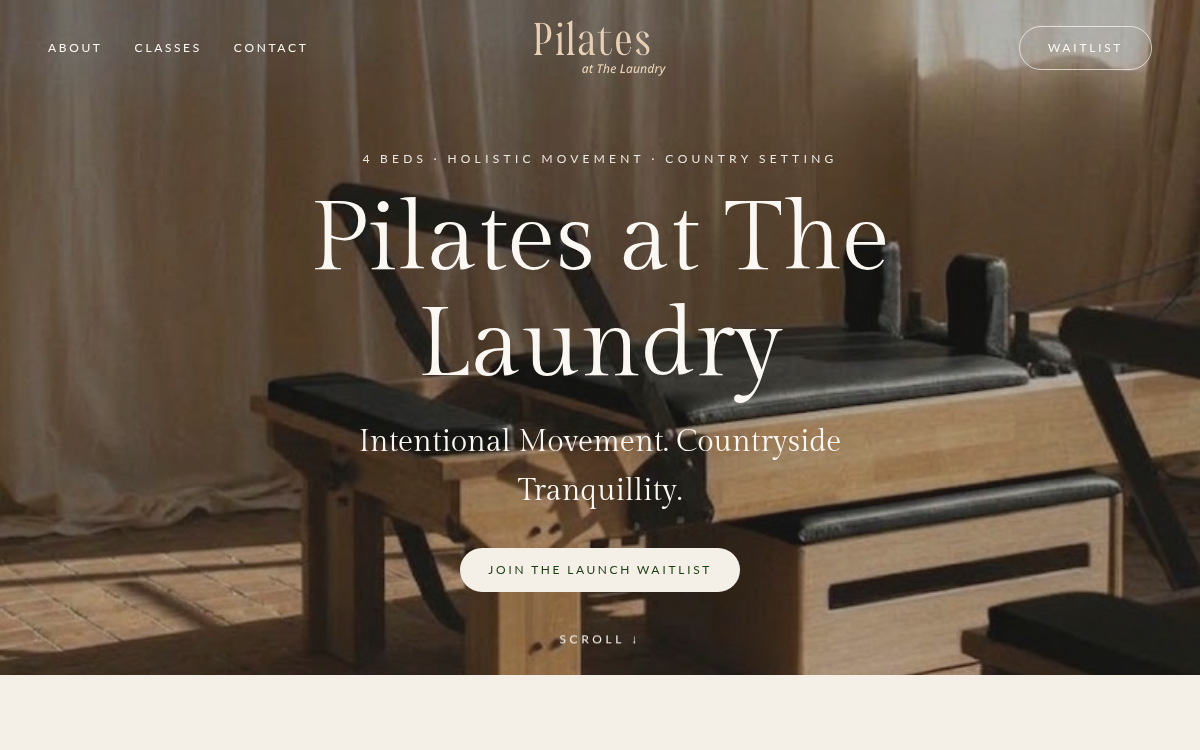
The palette is warm and earthy: soft cream and sand backgrounds, a terracotta accent for headings and buttons, and a deep green for supporting text. It picks up the terracotta floor tiles and natural light of the studio itself. Headings are set in Gilda Display, an elegant serif, with Lato for body text, which keeps longer descriptions easy to read. The logo pairs "Pilates" with a lighter "at The Laundry" beneath it, so the name reads well both large on the homepage and small in an email header.
The Pilates Studio Website Design
A homepage that does the whole job
The site is focused: a homepage, a Contact and Find Us page, an FAQ page and the terms and conditions. The homepage carries most of the story in one scroll.
It opens on a full-width photograph of the reformers against sheer curtains, with the studio name, the strapline and a single button to join the launch waitlist. Above the name, one line sums up what makes the studio different: four beds, holistic movement, country setting.
From there the page moves through a short welcome, the approach (why classes are capped at four beds and what that means for hands-on guidance), the packages, the two classes and finally the waitlist sign-up.
Two classes, explained properly
The studio offers two classes, and each gets its own section:
- Beginner Friendly Flow, for people new to the reformer or returning to movement, focused on form, core stability and confidence.
- Reformer Flow, for clients with some reformer experience who want a more continuous, challenging session.
Each section has a short description plus Best for and Focus notes, so a visitor can tell in a few seconds which class suits them. Both mention the breathwork and massage finish that closes every session, which is a big part of what sets the studio apart.
Clear packages
Class packs, a launch offer for the first class, an intro offer and private sessions for one, two or four people are all set out on the homepage, with validity periods stated plainly. Being open about the options means fewer "how does it work?" messages and visitors who arrive at their first class knowing what they have bought.
Built for a launch
At launch the timetable section reads Coming soon, and every call to action on the page leads to one place: a waitlist form asking only for an email address and first name. That form feeds the newsletter, so the studio launches with a list of interested local people instead of an empty diary.
Local search and practical details
Most clients will come from nearby towns, so the site is set up for local search. Every page has its own title and description, the homepage describes the studio as reformer Pilates in Soulbury near Leighton Buzzard, and the structured data marks it up as a local fitness business with its address, map location and the surrounding towns it serves, from Leighton Buzzard and Wing to Tring, Aylesbury and Milton Keynes.
The Contact and Find Us page handles the questions new clients always ask: where exactly the studio is, how it relates to Soulbury village and Leighton Buzzard station, and how to get there from London by train. The FAQ page covers what reformer Pilates is, whether it suits beginners, how often to come, cancellations and private sessions.
The Pilates Website Booking System and Automations
Behind the website sits the operational side, which is where a small studio either saves or loses hours every week.
- Booking system. Clients have a member account where they hold class credits, book classes and cancel or reschedule within the studio's 24-hour policy, which is set out in plain English on the terms page.
- Newsletter flow and welcome emails. New sign-ups receive welcome emails automatically, introducing the studio and keeping them warm until booking opens.
- Branded email template. Newsletters and announcements go out in the studio's own colours and fonts, so they look like they come from the same place as the website.
- Automations. Routine steps, such as sending the right emails when someone joins the list, happen automatically rather than by hand.
- Tutorials. We created tutorials so the owner can update the site, send newsletters and manage bookings without having to call us.
If you are wondering which of your own admin tasks are worth automating first, our guide to what business automation is and where to start is a good starting point, and our business automation service explains how we set it up.
What the Studio Got
- A complete brand identity: logo, palette and typography
- A focused, mobile-friendly website built around a launch waitlist
- Clear class descriptions, packages and practical travel information
- Local SEO foundations, including structured data and an FAQ page
- A booking system with member accounts, credits and cancellation rules
- An automated newsletter flow, welcome emails and a branded email template
- Tutorials so the owner can run everything herself
The site launched on 27 October 2026, so it is too early for results and we are not going to quote any. What the studio has is everything it needs to open its doors: a brand, a list of interested people and a booking system ready for the first class.
What Other Studio Owners Can Take From This
- Build the list before the timetable. A waitlist turns launch-day interest into people you can email the moment booking opens.
- Explain each class in plain terms. "Best for" and "Focus" notes help beginners choose without asking.
- Make the setting part of the brand. A distinctive place is a reason to choose you over a bigger gym.
- Connect the systems from day one. Booking, email and the website should work together before the first class, not after.
Frequently Asked Questions
What should a Pilates studio website include?
At a minimum: what makes your classes different, which class suits a beginner, your packages, where you are and how to get there, your cancellation policy, and one obvious way to book or sign up. An FAQ page helps a lot for people who have never tried reformer Pilates.
Should a Pilates website have its own booking system?
If clients buy class packs and book regularly, yes. A booking system with member accounts and credits lets clients manage their own bookings and cancellations, which saves the studio a lot of messages.
Can you build a studio website before the timetable is ready?
Yes, and it is often the best time. A launch site with a waitlist lets you build interest and an email list, then switch the main call to action to booking once classes open.
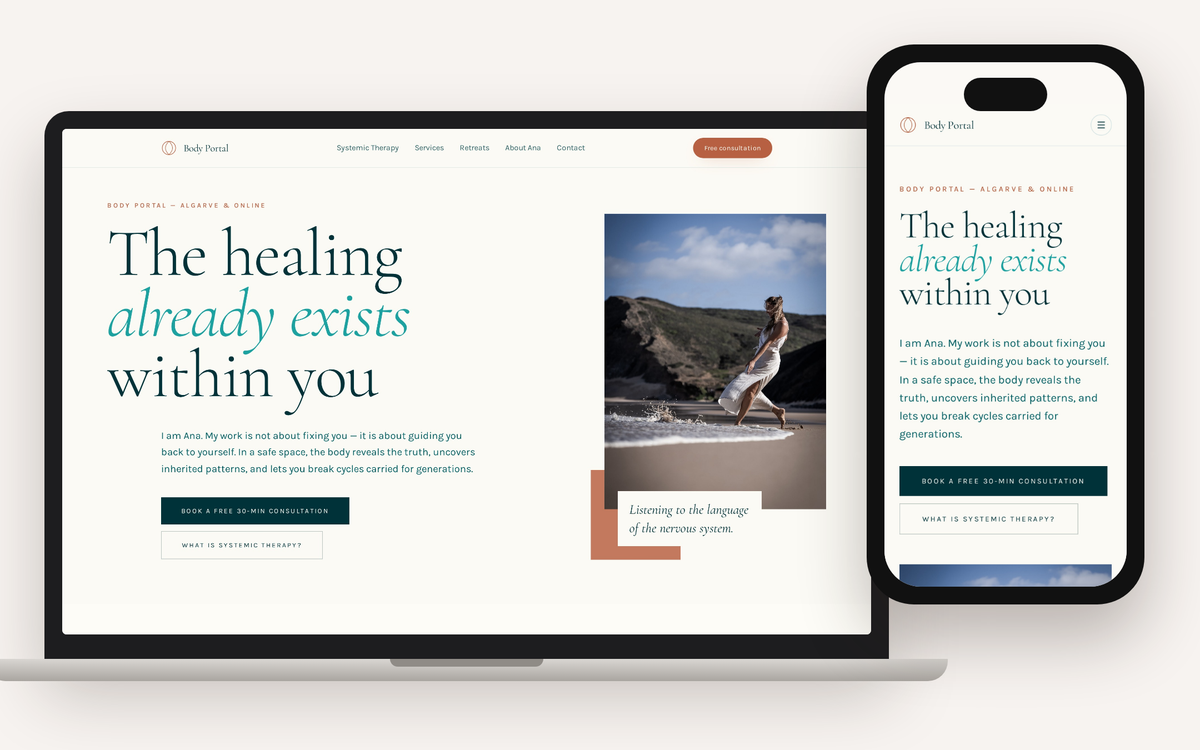
Running a Pilates, yoga or wellness studio and want a website and systems that work as calmly as your classes? See our wellness and therapist websites, read how we approached Body Portal's website, or get in touch.
Visit the live site: pilatesatthelaundry.co.uk
Want similar results for your business?
Let's discuss how we can help you achieve your goals with a custom solution.
Start a Conversation